Introduction
Every marketing team starts with good intentions. You create a content calendar, assign responsibilities, choose a few tools, and expect everything to run smoothly. That was our expectation too. But as our campaigns expanded and our workload increased, our process became more complicated than productive.
Instead of focusing on strategy and creativity, we found ourselves spending a surprising amount of time switching between tabs, searching for files, rewriting content, checking approval statuses, and manually publishing posts. None of these tasks were individually difficult, but together they consumed hours every week.
The biggest lesson we learned was that productivity isn't always about working harder or hiring more people. Often, it's about removing unnecessary friction from everyday tasks.
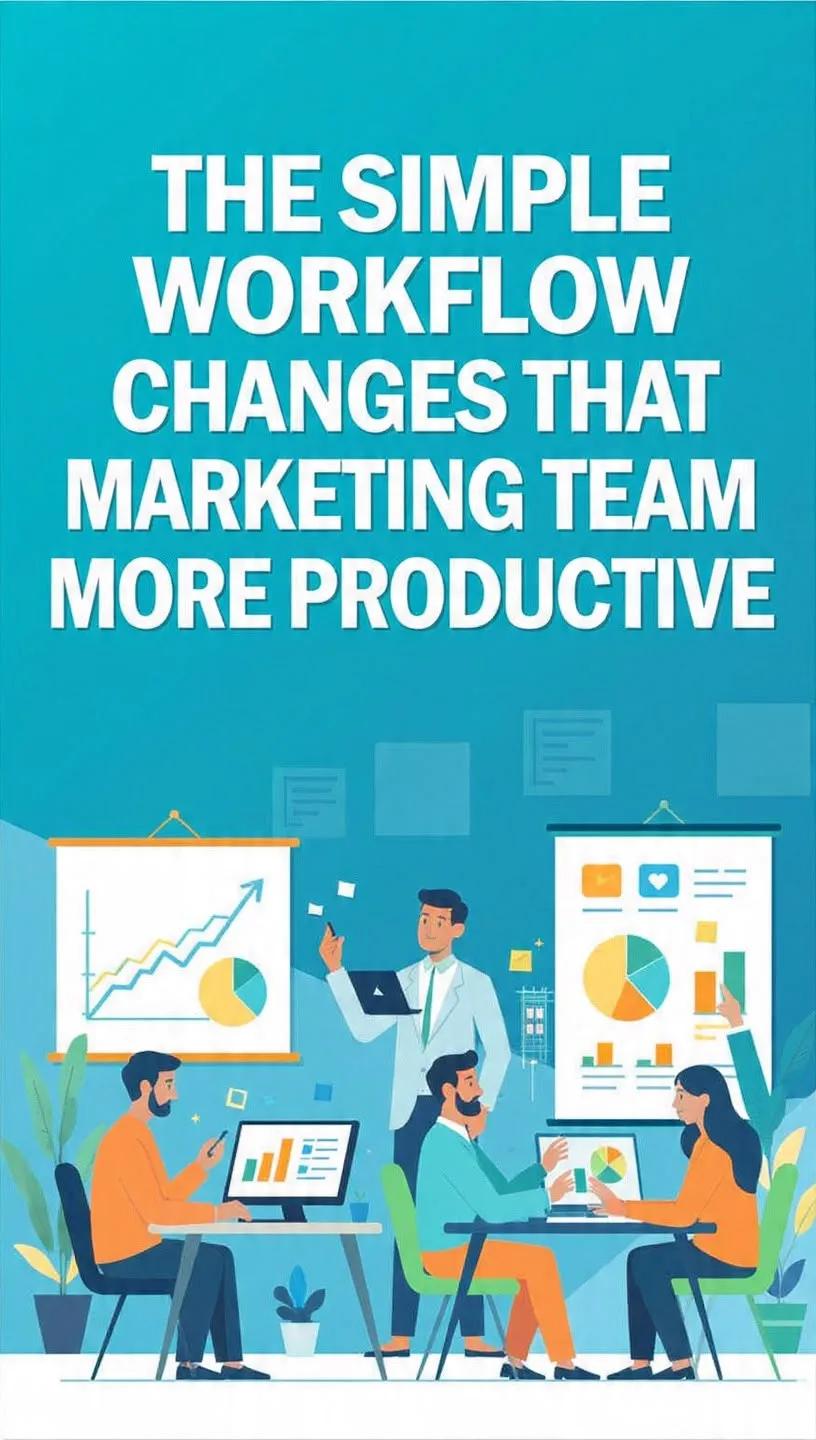
Over the course of three months, we made a series of small workflow improvements. None of them were revolutionary on their own, but together they transformed how our team collaborated, planned campaigns, and managed content. This article shares those changes in the hope that they help other marketers simplify their own processes.
We Were Busy, But Not Always Productive
There is an important difference between being busy and being productive.
Our calendars were full of meetings, revisions, and last-minute requests. Everyone appeared occupied, but many tasks took longer than necessary because our workflow lacked consistency.
A typical content project involved multiple back-and-forth conversations before it was finally published. A single social media campaign might require opening several different platforms just to gather the required information.
Eventually, we realized that the problem wasn't our team's capability—it was our process.
Change #1: We Standardized Content Planning
The first improvement was surprisingly simple.
Instead of allowing each team member to organize projects differently, we created a standardized planning process.
Every content idea now included:
Working title
Target audience
Primary objective
Content format
Publishing platform
Due date
Assigned owner
Approval status
This consistency reduced confusion almost immediately.
A structured content calendar became the foundation of our workflow. It also made it easier to identify content gaps before they became problems.
If you're still creating posts one day at a time, building a dedicated content calendar is one of the most effective improvements you can make. I recently shared a deeper guide on social media content planning that explains how organizing ideas in advance can improve consistency across every platform.
Change #2: We Reduced Context Switching
One of the biggest productivity killers was constant context switching.
Research suggests that repeatedly moving between unrelated tasks can reduce focus and increase the time needed to complete work. We noticed this firsthand.
Writing a blog post often required opening:
Documents
Messaging apps
Image folders
Analytics dashboards
Scheduling platforms
Browser tabs with previous research
Each interruption forced us to mentally restart our work.
Instead of multitasking, we began grouping similar activities together.
Change #3: We Used AI for First Drafts, Not Final Drafts
One misconception about AI is that it replaces creativity.
Our experience was different.
We started using AI primarily to overcome blank-page syndrome. Instead of asking it to create finished articles, we used it for:
Brainstorming headlines
Organizing outlines
Suggesting introductions
Rewriting repetitive sections
Generating content ideas
This approach reduced drafting time without sacrificing quality.
Change #4: We Built Better Approval Processes
Before improving our workflow, approvals often happened through scattered chat messages.
Someone would approve a graphic in one conversation but request changes to the caption in another. Sometimes feedback was duplicated because multiple reviewers commented independently.
To solve this, we established a simple approval sequence.
Every project now moved through four stages:
Draft
Internal Review
Final Approval
Scheduled for Publishing
Everyone understood where a project belonged.
This reduced unnecessary revisions and prevented accidental publishing mistakes.
Change #5: We Started Measuring What Actually Mattered
One of the biggest shifts in our workflow wasn't adding another tool—it was changing how we measured success.
Previously, our reports focused almost entirely on vanity metrics like impressions, likes, and follower growth. While these numbers were useful, they didn't always tell us whether our content was helping us achieve business goals.
Instead, we began asking questions such as:
Which posts generated meaningful conversations?
Which content drove visitors to our website?
Which campaigns encouraged newsletter sign-ups or product inquiries?
Which formats consistently performed well over time?
Answering these questions helped us create content with purpose instead of simply filling our publishing schedule.
We also stopped treating analytics as something to review only at the end of the month. Instead, performance became part of our weekly workflow. This allowed us to make small improvements continuously rather than waiting until a campaign had already finished.
If you're trying to build a more data-driven content strategy, learning how to interpret social media analytics can help you identify what truly resonates with your audience.
Change #6: We Stopped Chasing Every New Trend
Every week seemed to bring a new social media trend, platform update, or marketing technique. We often felt pressure to experiment with everything.
The problem wasn't trying new ideas it was abandoning our existing strategy too quickly.
Instead of jumping from one trend to another, we created a simple evaluation process before adopting anything new.
We asked ourselves:
Does this support our marketing objectives?
Will it benefit our audience?
Can we consistently maintain it?
Does it improve our existing workflow?
If the answer to most of these questions was "no," we simply noted the trend and moved on.
This approach reduced distractions and helped our team focus on long-term growth instead of short-term excitement.
Change #7: Better Scheduling Reduced Last-Minute Stress
Few things create more pressure than realizing an important campaign should have gone live an hour ago.
Early in our process, publishing was largely manual. Team members had to remember posting times, switch between platforms, upload assets, and double-check captions. It worked, but only until someone became busy with another task.
Eventually, we recognized that scheduling wasn't just about convenience it was about consistency.
Planning posts ahead of time allowed us to:
Review campaigns more carefully.
Maintain a steady publishing schedule.
Coordinate content across multiple platforms.
Free up time for community engagement instead of repetitive publishing tasks.
More importantly, scheduled content gave our team confidence that campaigns would go live as planned, even during busy periods.
For teams looking to improve their publishing process, understanding different social media scheduling can simplify daily operations and reduce manual work.
Change #8: We Created Repeatable Templates
One unexpected productivity boost came from something incredibly simple: templates.
Previously, every campaign started from scratch.
We rewrote similar captions, recreated reporting documents, redesigned project briefs, and rebuilt publishing checklists repeatedly.
While customization remained important, we realized many parts of our workflow were almost identical.
So we created reusable templates for:
Blog outlines
Campaign briefs
Weekly reports
Social captions
Approval checklists
Content calendars
These templates didn't eliminate creativity they eliminated repetitive work.
Instead of spending thirty minutes formatting documents, we could begin working on the actual content immediately.
Change #9: We Improved Team Communication
Many workflow problems aren't caused by technology they're caused by communication.
We discovered that team members often had different assumptions about priorities.
One person believed a campaign was ready for publishing.
Another thought it still required revisions.
Someone else assumed the graphics were already approved.
These misunderstandings created unnecessary delays.
To solve this, we introduced short weekly planning sessions.
Rather than discussing every small task, these meetings focused on three simple questions:
What are we publishing this week?For example:
Monday
Research
Brainstorming
Content outlines
Tuesday
Writing
Wednesday
Editing and approvals
Thursday
Graphics and scheduling
Friday
Performance reviews and optimization
This batching approach helped everyone stay focused on one type of work instead of constantly changing directions.
This simple mindset prevented unnecessary subscriptions and reduced the temptation to constantly switch between platforms.
If you're comparing different scheduling and collaboration solutions, reading detailed comparisons can help you identify which features genuinely matter for your workflow rather than simply following industry trends.
Similarly, understanding how different Social Media publishing platforms support growing marketing teams can make future decisions much easier.